

One question, followed decision by decision.
Who Decides? is the one series this site writes. Each part follows a decision that shapes what Europeans may say, read and be tracked doing online, from proposal to law, and names the people and bodies who made it. A part comes out when something has happened, not because a calendar says so. The live records that go with it, the Chat Control Tracker, the table of where the 27 governments stand and the glossary, are kept up to date between parts.
Who Decides? Read in order
When a post disappears
8 August 2026
Almost half of the content decisions platforms report in the EU are fully automated. The Digital Services Act says you are owed an explanation, and it is unusually specific about what that explanation has to contain. Here is what you can demand when a post is removed or quietly buried, and where the European rules run out.
Chat Control: the law that passed and the law still being fought over
12 August 2026
Two EU laws share one nickname. One has been in force since 31 July 2026 and explicitly protects end-to-end encryption. The other is still being negotiated.
Prove your age: who decides what you must show to get in?
22 August 2026
Age checks are spreading from one country to the next, and the promise of protecting children is quietly turning into a demand to prove who you are. Before we accept that trade, one simpler question deserves an answer first.
When a No is not enough: who decides Chat Control this autumn?
31 August 2026
314 MEPs voted against bringing message scanning back. It came back anyway. This autumn the permanent version is on the table. Who actually decides, and by what rule?
Five trilogues, no deal: who decides Chat Control 2.0?
1 September 2026
Five rounds of closed-door negotiation have failed to settle Chat Control 2.0. A sixth is coming this autumn. Who sits in the room, what they are allowed to agree, and how you would find out if they did.
The Council’s lawyers said no. Chat Control went voluntary
4 September 2026
The Council's own lawyers have said since 2023 that ordering the scanning of everyone's private messages will not survive the EU Charter. So the Council stopped ordering and started permitting. Who decides now?
The law expired. The scanning did not. Who decides what happens to your messages?
5 September 2026
The scanning law lapsed in April. The scanning went on. Who decides what happens to your messages, and what do they owe you?
Three governments decide whether mandatory scanning can still be blocked
8 September 2026
Nine governments oppose mandatory scanning of private messages, 32.9 per cent of the EU population; a blocking minority needs 35. Three governments can close the gap: Germany, Belgium and Portugal.

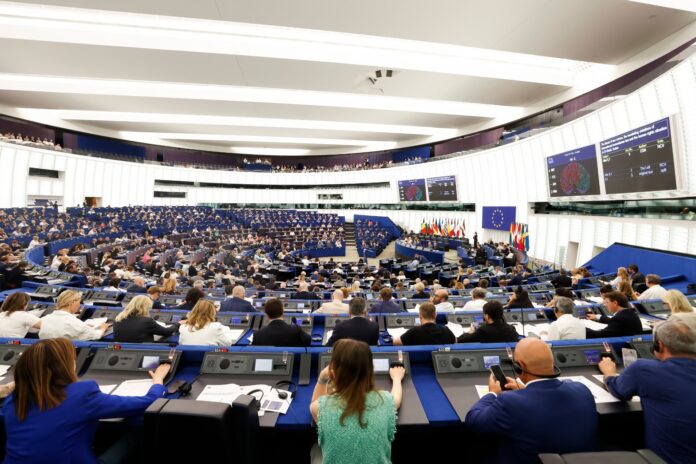






Alongside the series, unnumbered: Parliament’s own tracker says the scanning law expired. It came back in July. (31 August 2026, analysis). Parliament’s own legislative tracker still says the message scanning derogation expired in April. It came back in July and runs until 2028. How to check.
Opinion
Privacy is not diplomatic currency (28 July 2026). Visa-free travel should be negotiated with passports and border rules, not with the personal data of people who have done nothing wrong.
Record notes
Between parts, the record keeps moving in smaller steps: a document lands in the Council register, a government changes, a date is confirmed. Each of those gets a record note, a short dated entry with one document, what it says and what it changes on this site. They are not numbered and they are not parts of the series; they are the working record behind it. All record notes.
- Chat Control: a “possible detection package” on the Council’s agenda, and nothing published 22 October 2026
- How many governments oppose Chat Control? It depends on the question 10 October 2026
- Only one of 27 governments is on record for scanning suspects only 5 October 2026
- The sixth trilogue: a deal on the EU Centre, none on private messages 2 October 2026
- The presidency’s question: leave private messages out of the regulation? 25 September 2026
- The reflection paper of 24 July: what it says about the sixth trilogue 17 September 2026
- The four-column table of 19 May: what it says about encryption 14 September 2026
- The presidency’s compromise on detection, document 9659/26: what it says 11 September 2026
- Slovenia, from Against to Unclear: the two documents behind the change 10 September 2026
- The Council’s own note on the sixth trilogue: agreement on everything but detection 9 September 2026
What comes next
What the sixth political trilogue on Chat Control 2.0, held on 29 September 2026, agreed and did not agree is set out in a record note of 2 October. The next part follows once the Council publishes its account of the round or the next trilogue is held. Until then the tracker and the table of governments carry every change, each with a date and a source. New parts are announced in the Briefing.
Earlier threads (July to August 2026)
Before the series settled on one question, the site followed four themes, largely through reporting republished from the Electronic Frontier Foundation, EDRi and Global Voices. Republishing ended in September 2026. The pieces that concern Europe stay online under Republished; the threads themselves are closed and kept here for the record.
Watching the Watchers
How surveillance gear quietly becomes normal: cameras that read number plates, towers on borders, microphones on lamp posts. Equipment that arrives first and gets explained later. Still online from this thread: EFF and Civil Society Groups Call on Nottinghamshire Police to Halt Live Face Recognition (EFF, 23 August 2026).
Papers, Please
Identity, borders and the right to belong. Every border is also a filing system, and whether you may cross it depends on records you have never seen. Still online from this thread: The EU is about to sell our most sensitive data to the US for visa-free travel (EDRi, 22 July 2026).
Who Decides What You Can Say
The rules of online speech are being written now, by parliaments, platform policy teams and trade negotiators, and nobody asked for your vote. This thread grew into the Who Decides? series above. Still online from the thread: Automated Moderation Is Here to Stay: Accountability Must Keep Pace (EFF, 20 July 2026) and EFF and ARTICLE 19 Submission to the European Commission on the DSA Trusted Flagger Guidelines (EFF, 16 July 2026).
Held to Account
When courts and researchers catch up: the cases where something went wrong and somebody had to answer for it. Its articles concerned cases in the Americas, from a Supreme Court ruling in Washington to face recognition in Paraguay, and were retired from the public archive when republishing ended in September 2026.